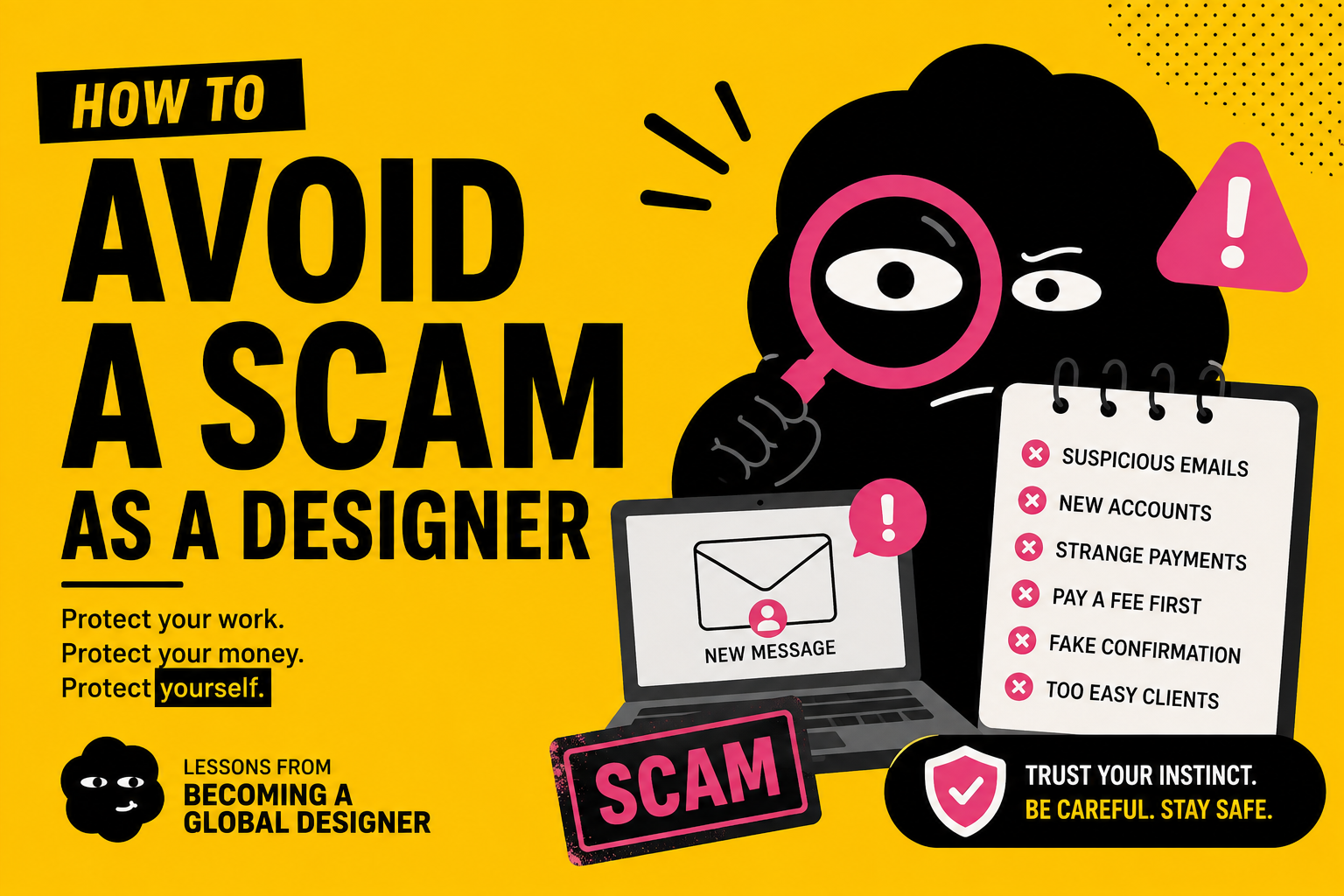
How to Avoid Getting Scammed as a Designer
Freelancing gives you freedom. But it also means you have to protect yourself.
When you work with clients online, especially international clients, not everyone who contacts you is actually looking to hire you.
Some are looking to take your work, your money, or simply waste your time.
I’ve experienced this myself, which is why I included scams and client safety in my book Becoming a Global Designer. Because learning how to work with clients isn’t only about getting better at design—it’s also about knowing who you can trust.
Here are some warning signs every designer should know.
1. An Unprofessional Email Address
Be careful when someone contacts you from a strange or suspicious email address, especially one filled with random numbers or words.
A personal email doesn’t automatically mean someone is a scammer. But when the identity, company, and email address don’t seem to match, take a moment to investigate.
Always verify who you’re dealing with.
2. A Brand-New Account
Someone contacting you through LinkedIn, Instagram, Behance, or another platform with a completely new account and no history should make you pause.
Look for:
Previous work
A real company or portfolio
Consistent social profiles
A professional online presence
A real client usually leaves some kind of digital footprint.
3. Strange Payment Methods
Be cautious when a client insists on using an unfamiliar payment platform or asks you to do something unusual to receive your money.
Established payment methods and clear payment processes are usually safer.
And remember:
Never pay money just to receive money.
4. “Pay a Fee First”
This is one of the biggest red flags.
If someone tells you that you need to pay a processing fee, service fee, release fee, or any other payment before receiving your payment, stop.
You shouldn’t have to pay a client in order to get paid by them.
5. Fake Payment Confirmation
Sometimes scammers send an email saying that they’ve paid you when they actually haven’t.
Don’t trust a screenshot or email confirmation alone.
Check your actual bank or payment account.
If the money isn’t there, the payment hasn’t happened.
6. A Client Who Is Too Easy
This one can be easy to miss.
A client who gives you an extremely simple brief, shows little interest in the project, asks almost no questions, and immediately wants to move forward can be suspicious.
Good clients usually care about what they’re hiring you for. They ask questions. They give feedback. They care about their brand.
If everything feels strangely effortless, pay attention.
Trust Your Instinct
My golden rule is simple:
If something feels off, trust your instinct.
Real clients respect professional processes.
They understand contracts.
They accept deposits.
They communicate clearly.
They don’t pressure you into strange payment arrangements.
You work hard to build your skills, portfolio, reputation, and confidence. Don’t let a scammer take that away from you.
Protecting yourself isn’t being difficult. It isn’t being paranoid. Being careful is part of being a professional designer.
Want to Become a Global Designer?
I wrote Becoming a Global Designer to share the lessons I wish more designers knew before entering the global freelance world—from working with international clients to protecting your work, time, money, and mental energy.
If you’re serious about building a career as a global designer, this book is for you.
👉 [Get your copy of Becoming a Global Designer]
Stay smart. Stay safe. Stay confident.
